




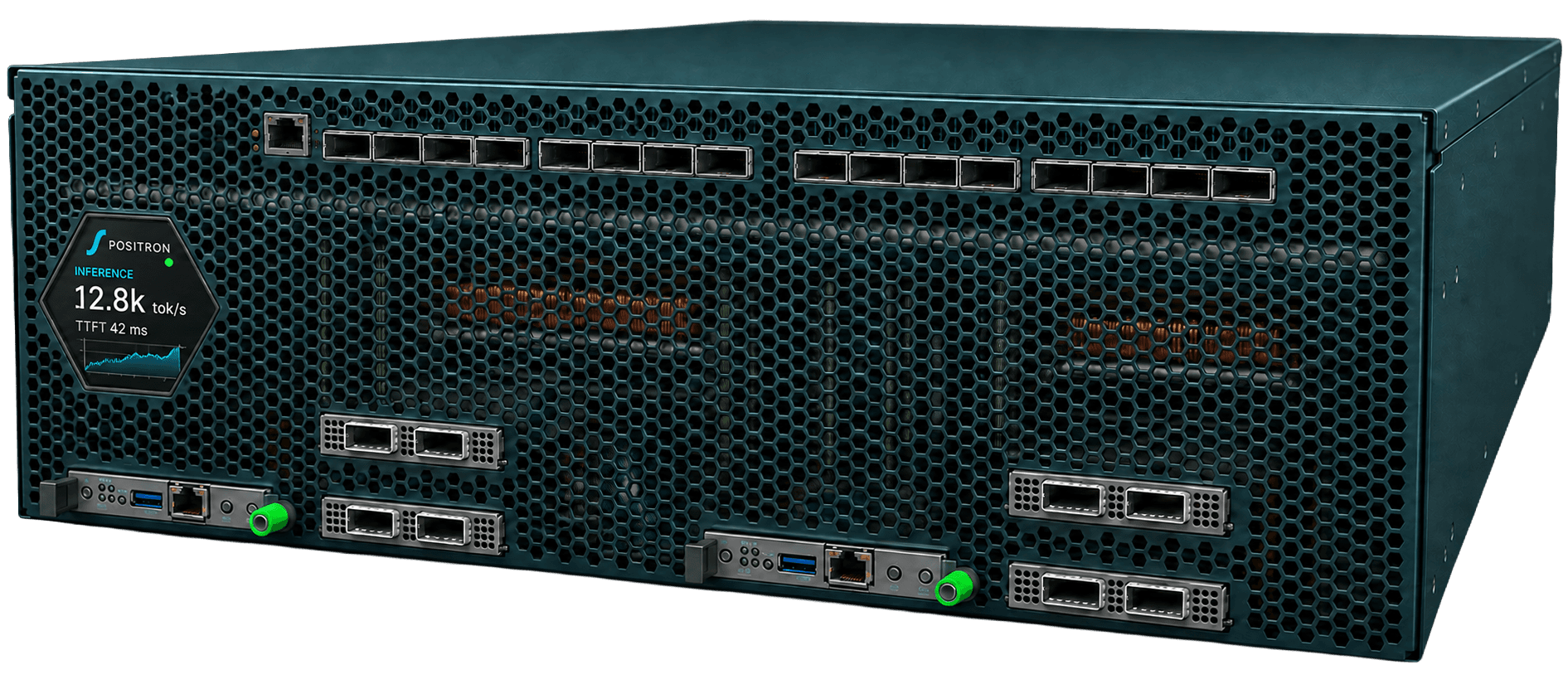
Built for Workloads That Don't Fit Anywhere Else
The limiting factor for frontier AI isn't compute—it's memory. Context windows are growing from thousands to millions of tokens. Models are scaling past trillions of parameters. Agentic workflows demand persistent state. Titan puts an unprecedented amount of high-bandwidth memory in a single system, with liquid or air cooling.
Seamless Scale-Out
From a single Titan system to 100TB+ at rack scale and beyond. The same software, the same APIs, the same architecture—just more capacity. No redesign required as your needs grow.
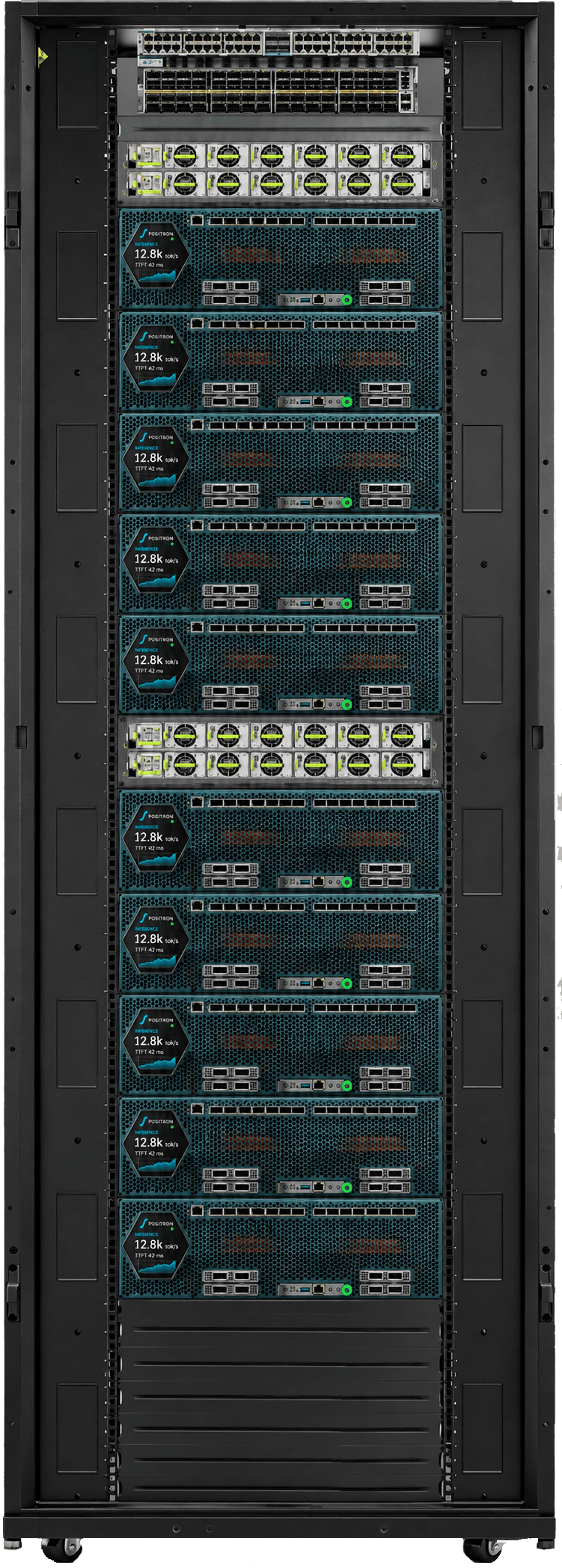
Multi-Trillion Parameter Models
Run multi trillion parameter models entirely in the memory of a single chip, or scale performance by distributing over multiple chips within one or over multiple servers without the complexity and latency of offloading to storage. Titan makes the 2030 class of frontier-scale models possible in 2027.
Million-Token Context Windows
Support context windows of 10 million tokens and beyond. Agentic workflows, document understanding, and long-form reasoning all require persistent state—Titan provides it.
Next-Generation Video and Multimodal
Video models are the next frontier, but they demand massive memory bandwidth and capacity. Titan is built for workloads that don't fit anywhere else.
Positron Delivers
24.8×
revenue per TCO dollar
Faster tokens.
Greater earning potential.
Asimov at 400 vs. Blackwell at 170 tokens/sec/user, assuming a 2× token selling price for the faster tier.
Faster inference already commands premium token pricing: Claude Fast Mode charges 2× standard rates, and GPT-5.5 launched with Priority processing at 2.5×.
Total tokens per dollar vs. interactivity
DeepSeek R1 0528 671B · FP4 · 8K input / 1K output
2.4×
tokens per dollar
5.7M vs. 2.4M tokens/$
26×
tokens per dollar
5.7M vs. 221K tokens/$ @ Blackwell’s maximum shown speed
4.1×
faster tokens at equal cost per token
400 vs. 97 tokens/sec/user at 2.7M tokens/$.
Asimov performance is based on cycle-accurate simulations. GPU data: SemiAnalysis InferenceX.
Comparisons, pricing assumptions & sources
Points 1 and 2 compare the devices at equal generation speed. Point 2 is near Blackwell’s maximum shown interactivity. Point 3 holds the Y-axis value constant and compares Asimov at 400 tokens/sec/user with the point on Blackwell’s curve at the same efficiency. The Point 3 callout lists both generation speeds and their shared efficiency.
The dollar view uses total tokens per modeled TCO dollar (capital and operating costs) under neocloud ownership assumptions. The power view uses token throughput per all-in utility MW. Axes use actual units and linear scales. The chart focuses on 75–450 tokens/sec/user; the Y axis starts at zero and scales to the values in that range.
The premium-tier scenario compares Asimov at 400 tokens/sec/user with Blackwell at its maximum shown speed of 170 tokens/sec/user. Revenue gain = token efficiency at those operating points × a 2× selling-price multiplier. It assumes the same 8K/1K token mix and the same sold share of generated tokens, with both input and output prices doubled for the faster tier. No absolute selling price is assumed. These are revenue ratios, not profit margins or additional speed gains.
As a market reference, Anthropic lists Claude Opus 5 and 4.8 Fast Mode at $10 input / $50 output per million tokens, versus $5 / $25 standard, and advertises up to 2.5× higher output speed (accessed September 10, 2026). OpenAI also launched GPT-5.5 Priority processing at 2.5× standard rates. These published serving tiers demonstrate premium pricing for faster inference. The revenue comparison above uses a 2× selling-price multiplier.

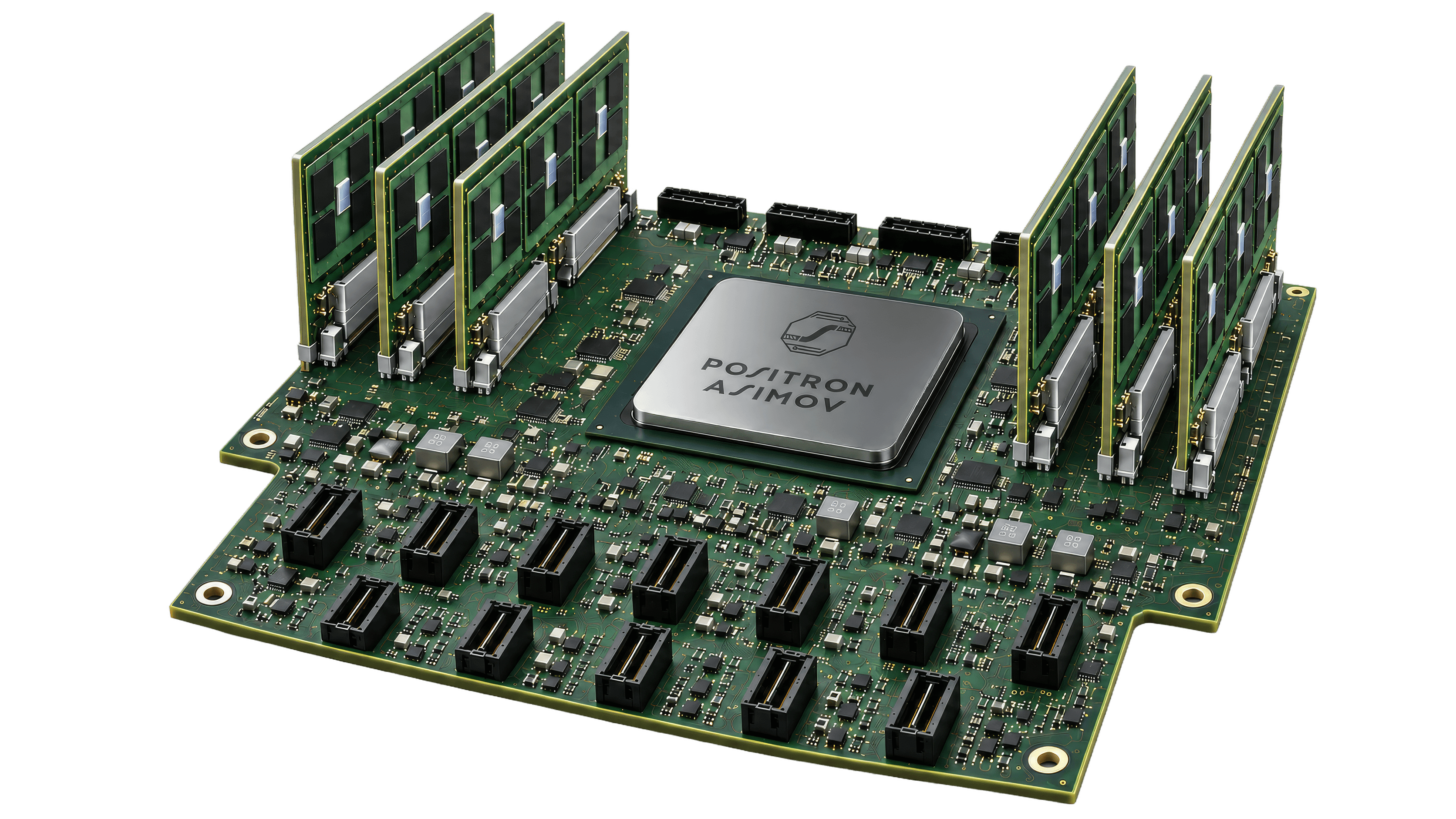
At the heart of every Titan system are four or eight Asimov chips—our custom silicon designed from first principles for memory-bound AI inference. Each chip supports 288GB to 2.3TB of high-bandwidth memory, enabling Titan's unprecedented capacity.
Learn about Asimov